
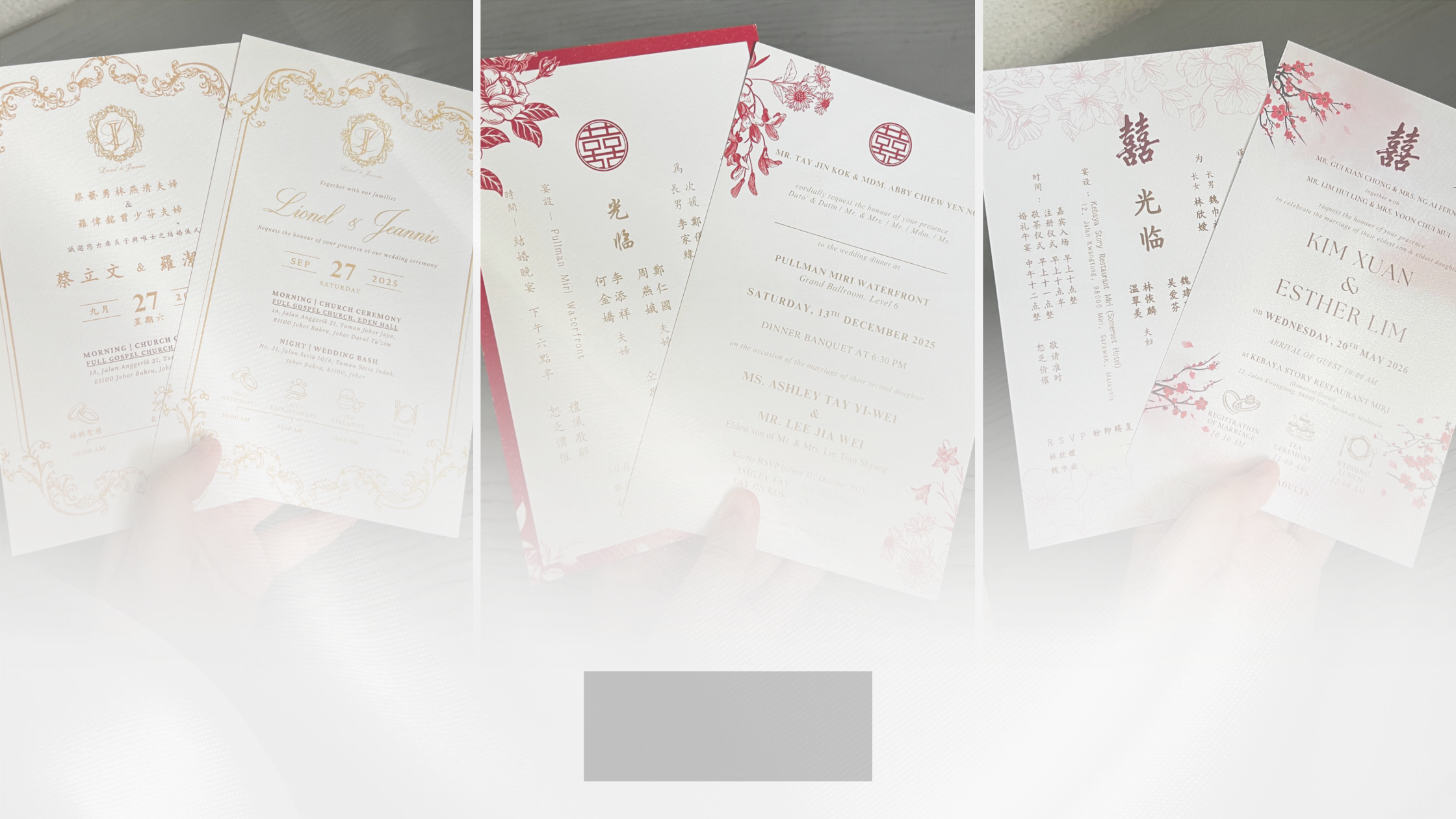
CASE STUDY · BUSINESS MODEL · OPERATIONS
Xamiya Wedding: How a High-Touch Invitation Studio Builds Scale Without Breaking Taste
Wedding invitations look like “design work” from the outside. In reality, they are a high-variance operations business with near-zero tolerance for mistakes: cross-cultural etiquette, emotionally charged timelines, elder approval cycles, and dozens of interacting variables across print, finishing, logistics, and RSVP flows. This case study explains why the category is hard to automate, why Southeast Asia’s Chinese market is structurally harder to SaaS-ify than USD markets, and how Xamiya scales by building its operating layer inside the Google ecosystem (0 SaaS, full data ownership).
Key takeaways
- This category is hard because the product is not the card—it’s the coordination under elder + cultural constraints.
- Automation must be governance: you don’t automate “beauty”, you automate the decisions around it.
- SEA Chinese markets are SaaS-resistant due to trust, education cost, and local workflow norms—not “low tech”.
- Xamiya scales by splitting the business: human judgment stays in design; repeatable states live in a closed-loop system.
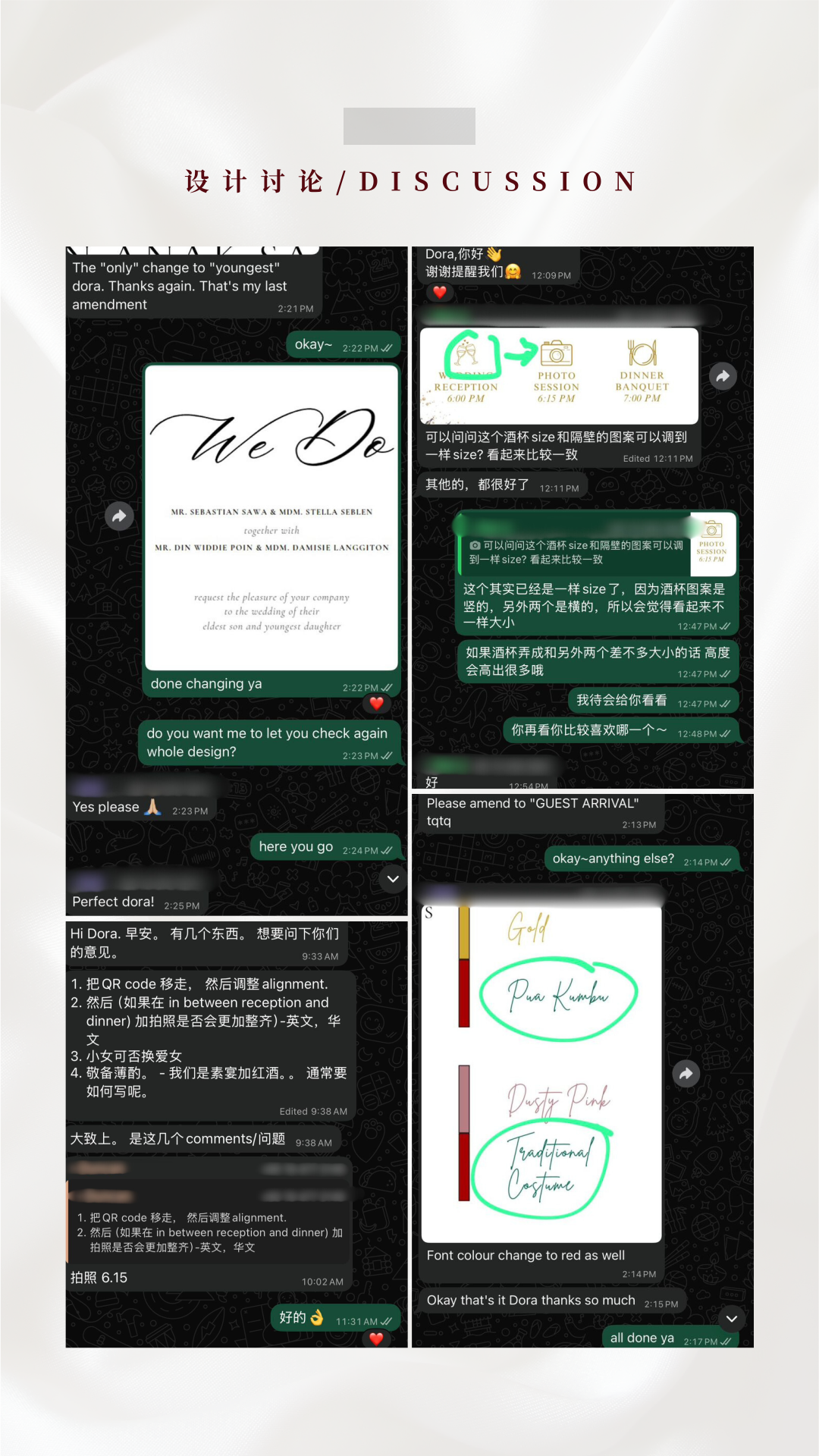
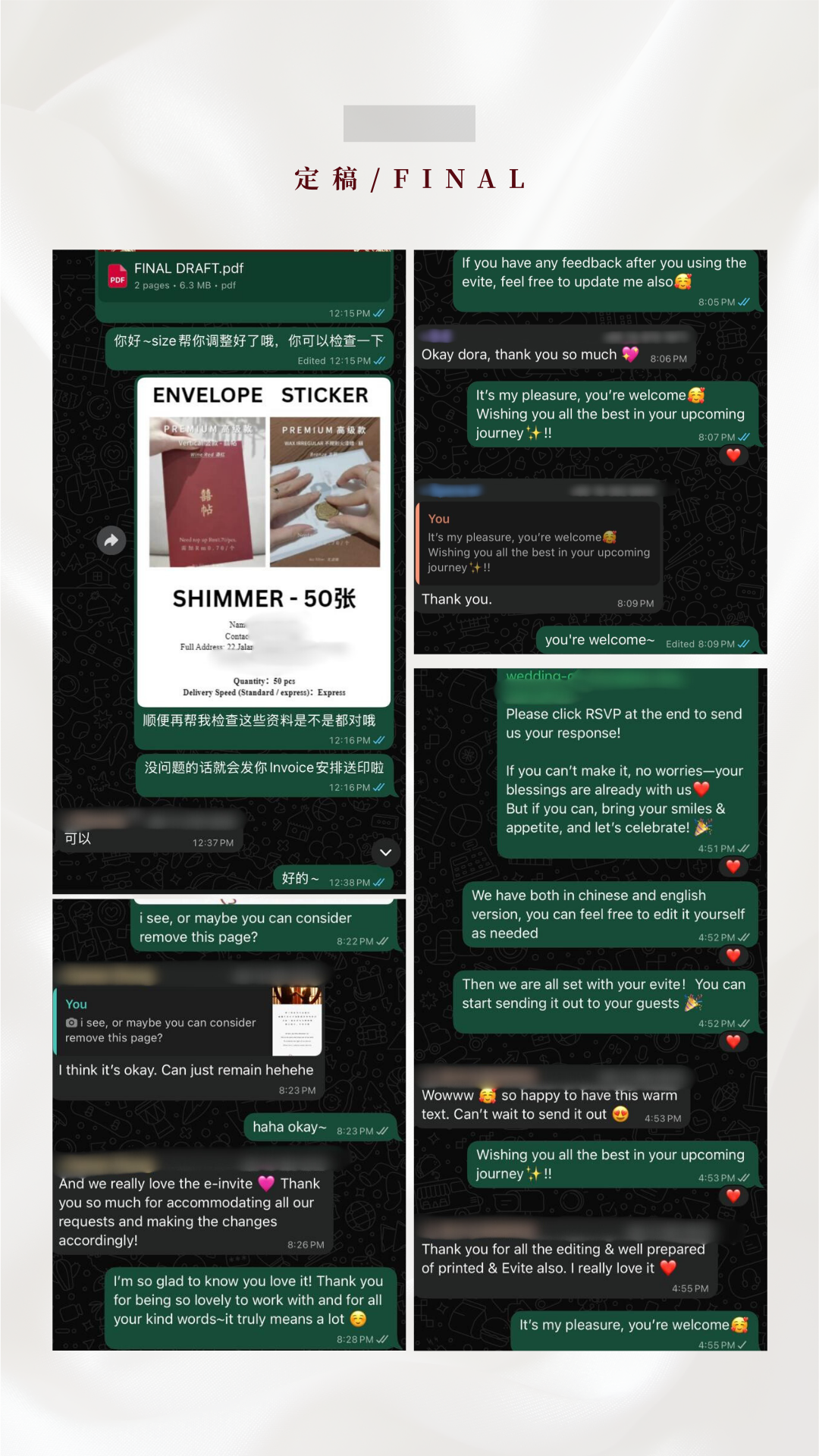
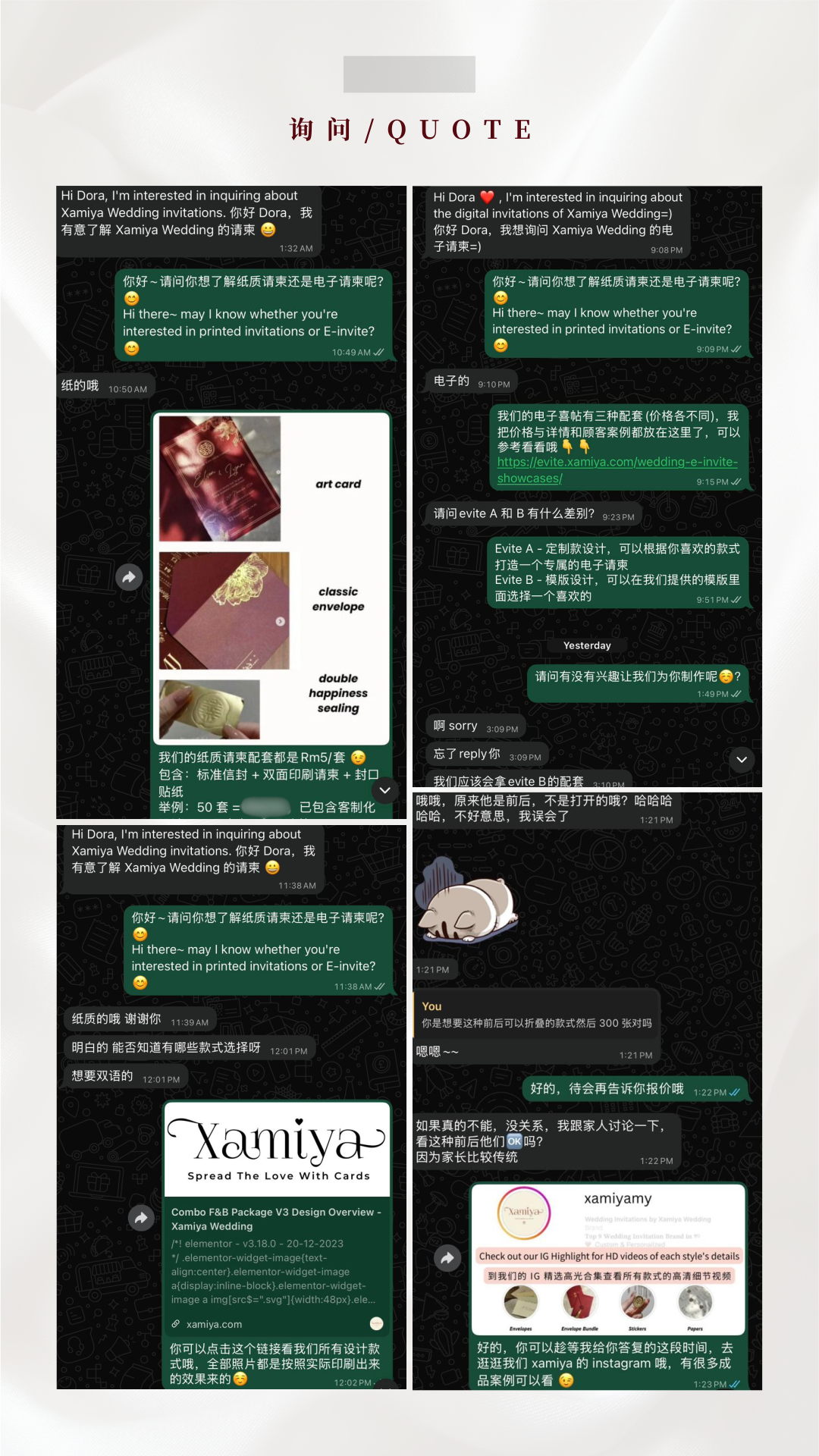
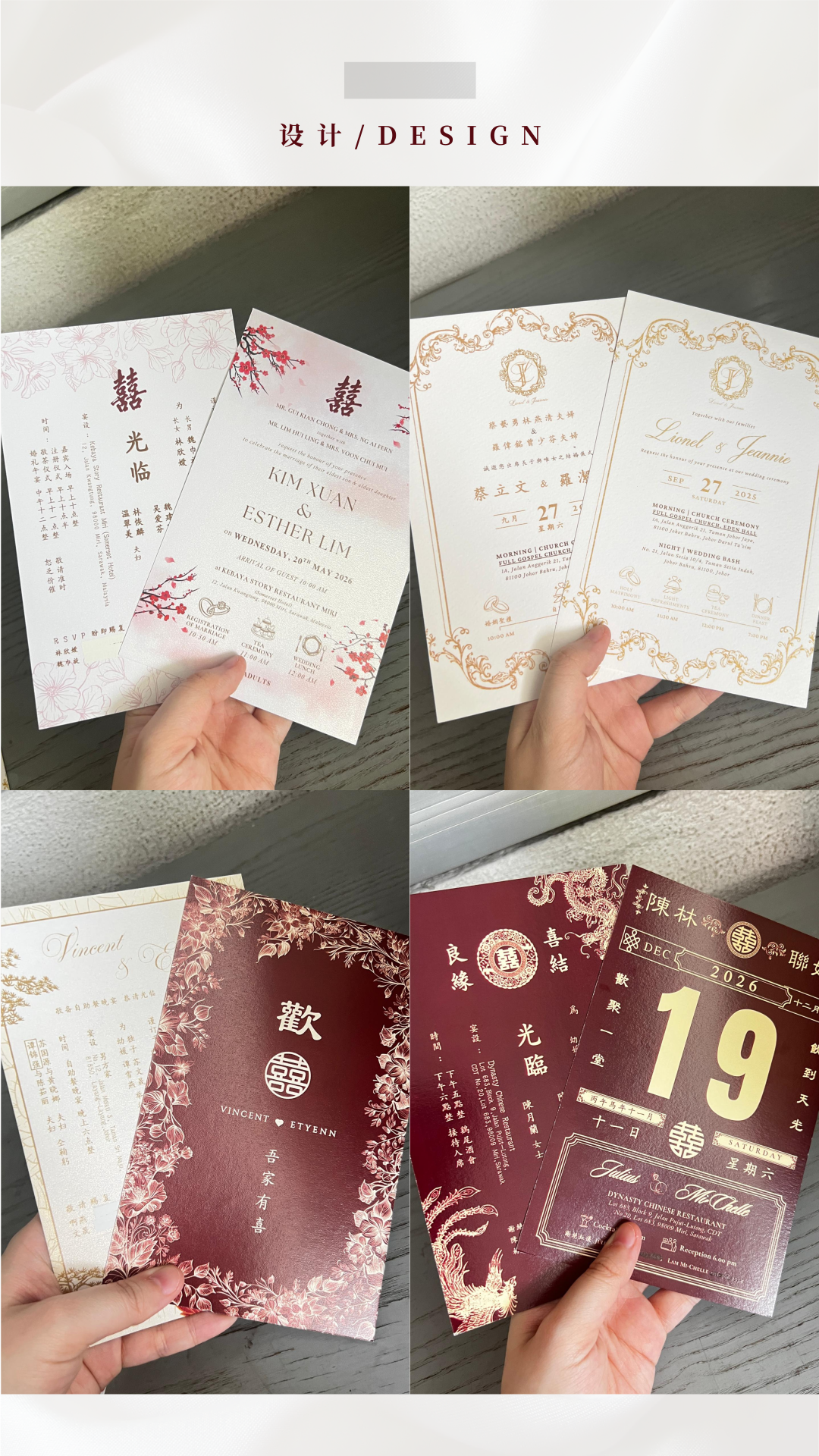
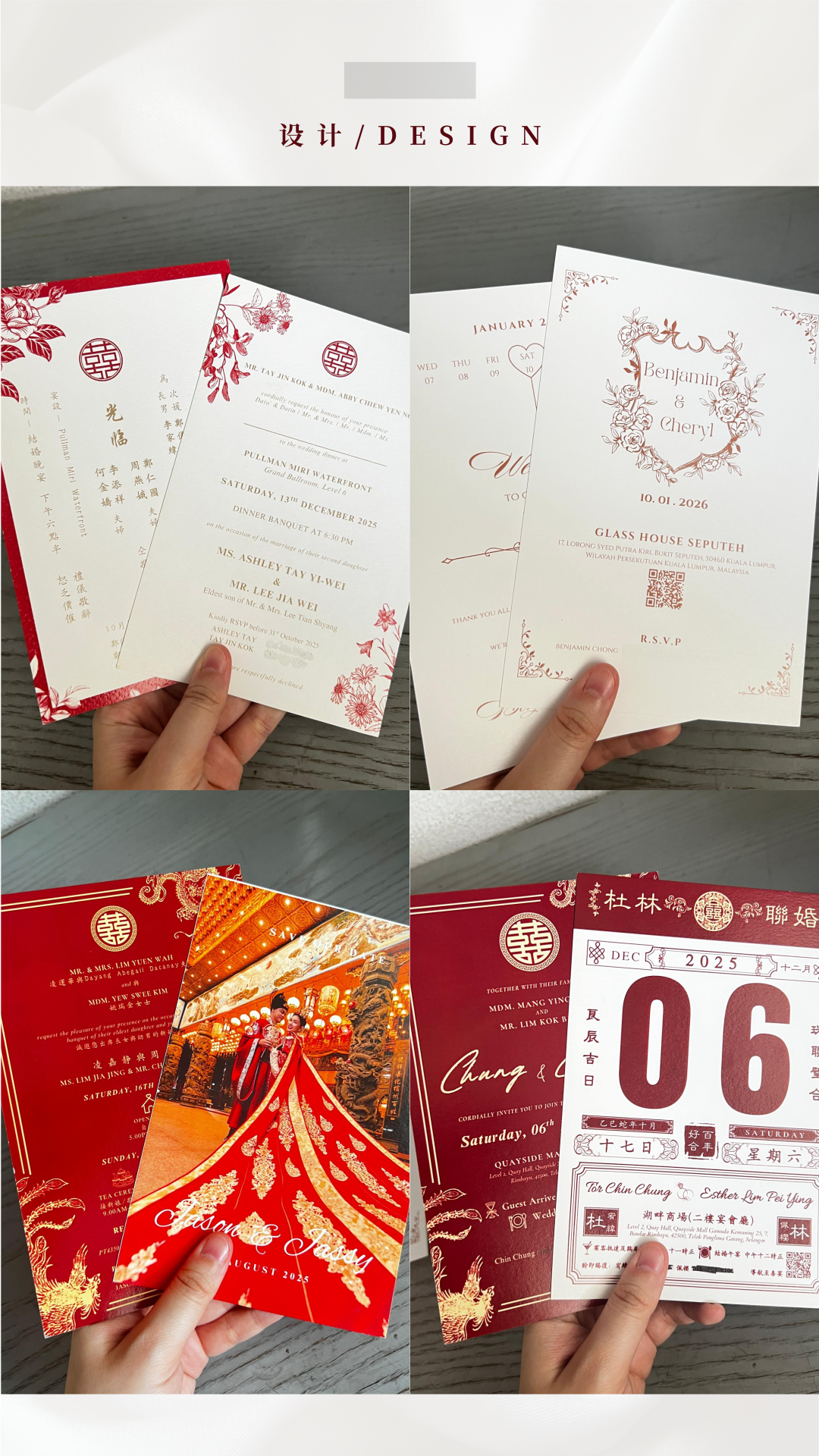
Visual library (real operational artifacts)
Everything below is shown as-is: real dialogues, checkpoints, and tactile outputs. All visuals are 9:16 assets, displayed in full (contain) so nothing gets cropped. Tip: click any image to open the original file in a new tab.
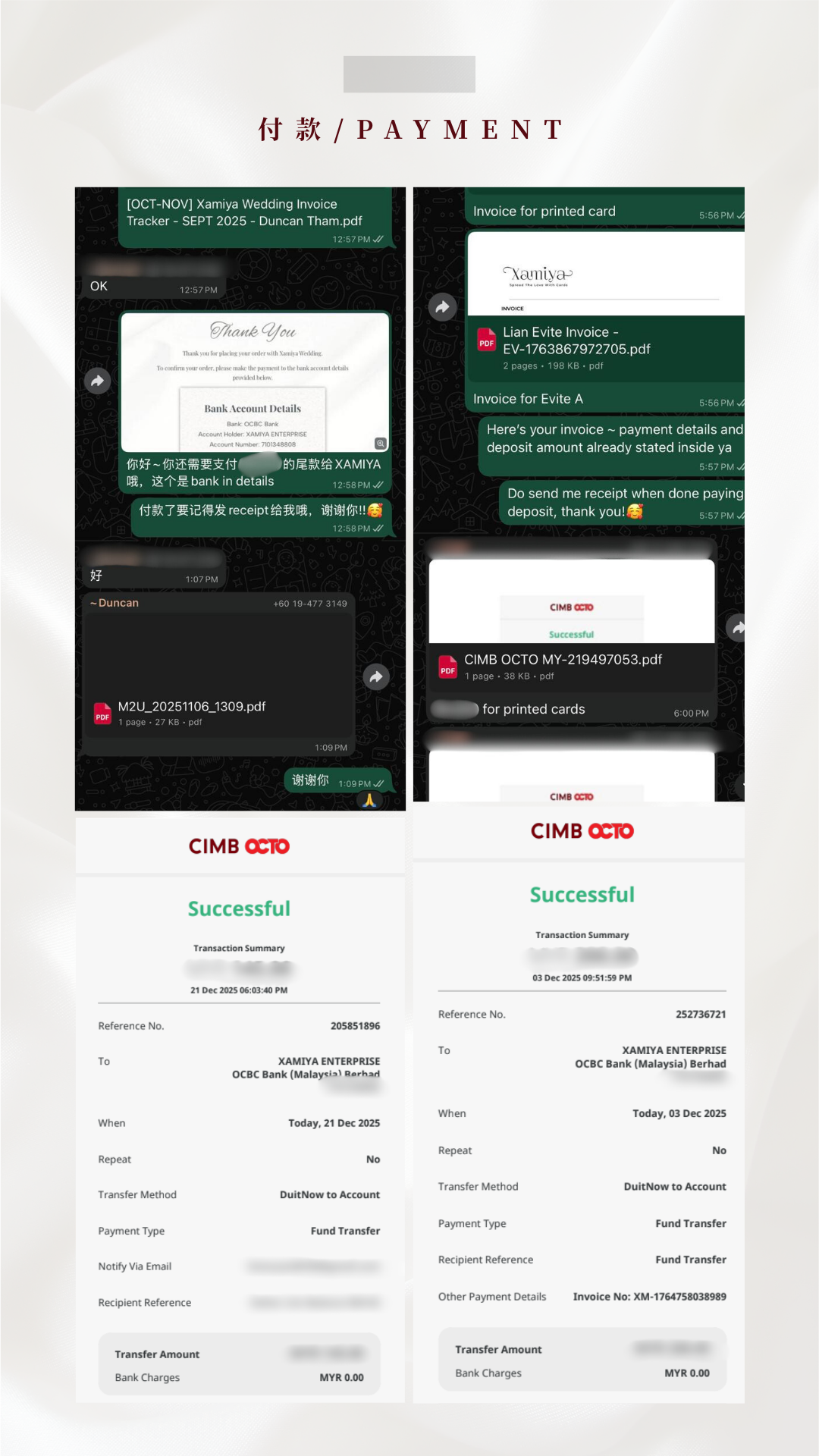
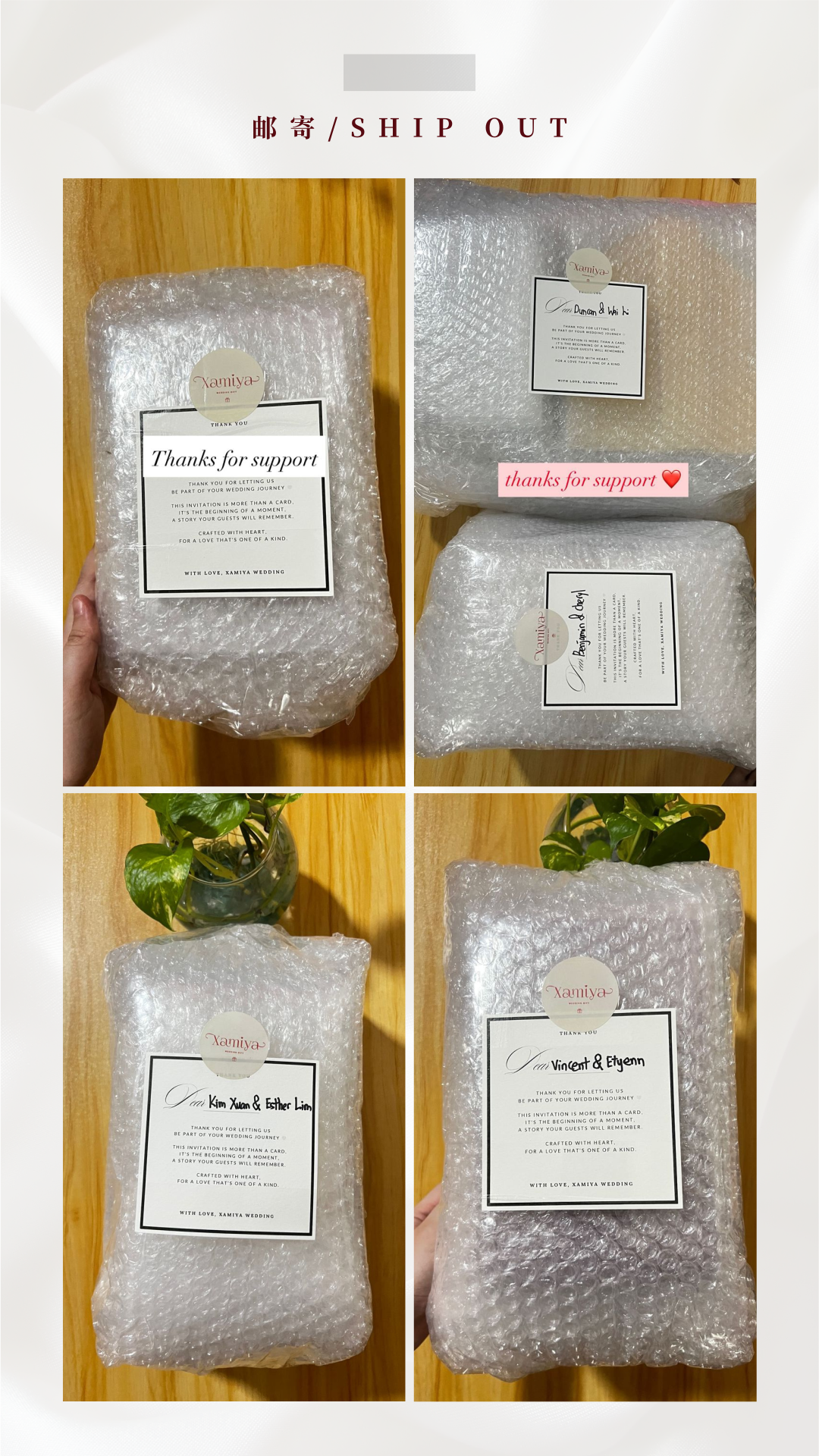
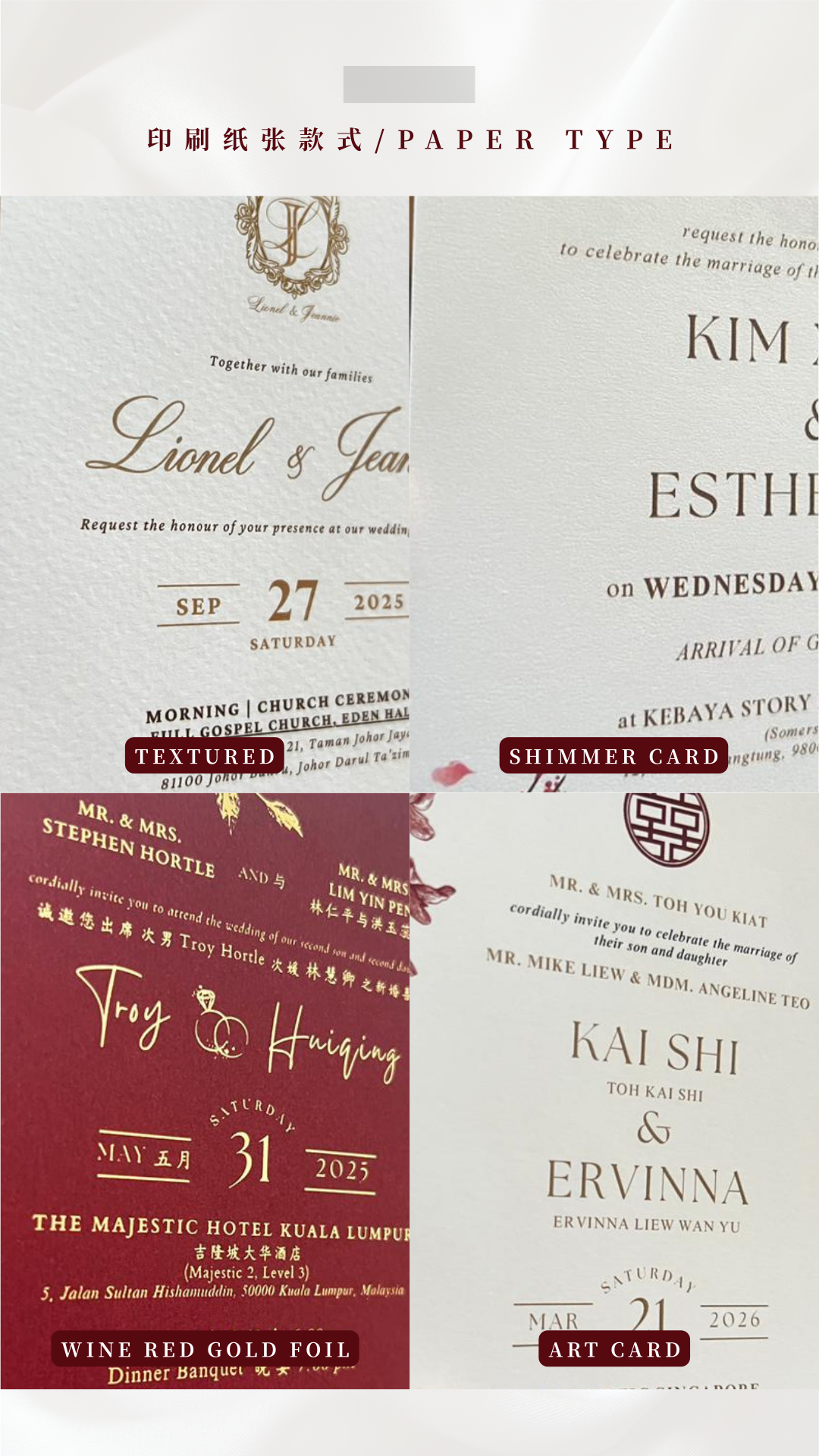
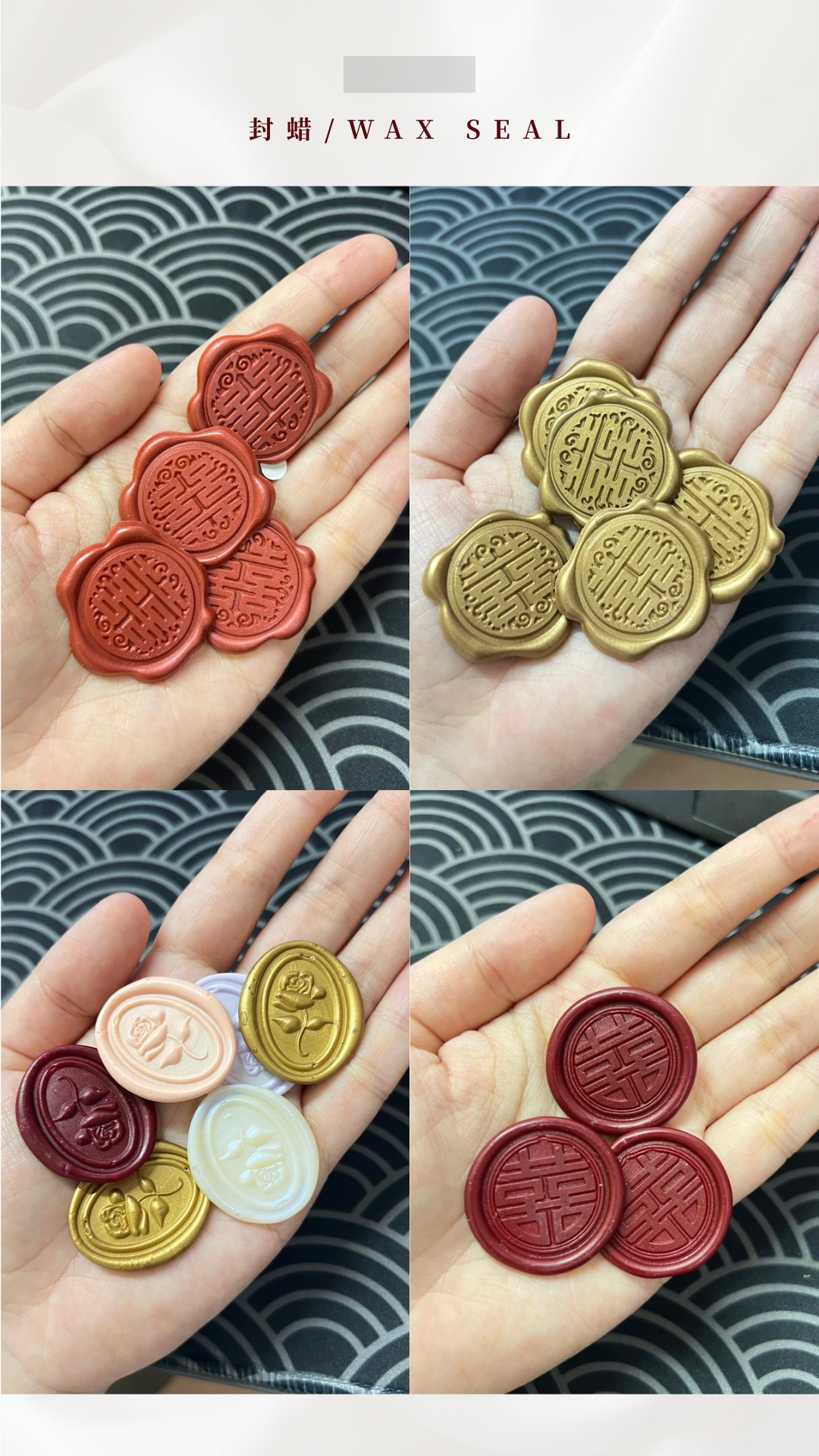
The investment thesis (in plain language)
Xamiya Wedding is not “a wedding invitation shop”. It is a high-touch, high-variance service business that is building an operating system strong enough to support delegation, repeatability, and eventually productization. The core bet is simple: in a category where most studios collapse under coordination debt, the winner is the one who turns chaos into states.
This case study explains the mechanics behind that bet: why wedding invitation operations are unusually hard to standardize, why automation cannot be approached like a generic SaaS workflow, and why Xamiya’s Google-ecosystem backend (Sheets + Forms + Docs + Drive + Gmail + Apps Script) creates a defensible advantage: low fixed cost, portable data, and strong internal control.
- Coordination debt
- The invisible cost of managing variables, revisions, family input, and logistics under time pressure.
- Operating layer
- A closed-loop system of states: quote → deposit → approvals → final billing → fulfilment → archive.
Why wedding invitations are unusually hard to run (and harder to scale)
Most people think invitations are “design + printing”. That assumption is what kills small studios. The real job is risk management across three simultaneous systems:
- Variable explosion: quantity, paper, finishing, envelopes, wax, bilingual typography, shipping region, timing, venue details, RSVP logic.
- Emotional timelines: wedding deadlines are non-negotiable; the client’s tolerance for ambiguity collapses as the date approaches.
- Multi-stakeholder approval: unlike most consumer purchases, the buyer is often not the final approver.
The approval problem is the hidden dragon. In many Southeast Asian Chinese households, invitations are not treated as a private design preference; they’re treated as a public-facing ceremony artifact. Elders may veto wording, format, colors, even paper “seriousness”. This creates a mismatch: the couple wants speed and aesthetics; the family wants legitimacy and tradition. A studio that cannot manage that mismatch becomes a customer-support job, not a premium service.
Why this category resists automation
A typical SaaS automation story assumes two things: users tolerate learning a new interface, and the workflow is stable enough to map into forms and steps. Wedding invitations violate both.
First, the workflow is stable only at the state level, not at the content level. You can standardize “when a quote is valid”, “when a deposit is recognized”, “when a draft is locked”, “when a final invoice is generated”, “when dispatch happens”—but you cannot standardize the human judgment inside creative direction and cross-cultural etiquette.
Second, the surface area is full of “soft exceptions”: last-minute elder edits, mixed-language honorifics, culturally specific formatting norms, and family politics that never show up in a CRM. In other words: automation succeeds here only when it is used to enforce governance and reduce coordination—not when it tries to replace conversations.
Why Southeast Asia’s Chinese market is harder to SaaS-ify than USD markets
This is not a “region is behind” story. It’s a structure story. In many USD markets, paying $20–$60/month for specialized tools is normalized across small businesses; workflows are already tool-driven; and there is higher tolerance for self-serve onboarding.
In Southeast Asia’s Chinese market, the friction often concentrates in three places:
- Education cost is higher: the user must learn the tool and learn the “process model” the tool assumes.
- Trust is earned offline: many buyers still prefer proof through human responsiveness, not interface polish.
- Payment psychology differs: recurring USD-priced subscriptions feel like “infinite rent” unless value is immediately obvious.
For wedding services specifically, the buyer’s goal is not “efficiency”. It’s “no embarrassment”. In this context, clients pay for a studio to carry uncertainty—and to translate between modern taste and elder expectations without conflict. That’s why “here’s a tool, edit it yourself” can be perceived as abandonment, not empowerment.
The cross-cultural design challenge: one wedding, multiple etiquette systems
Xamiya operates in a multi-ethnic, cross-border reality: language preferences, naming conventions, honorific structures, and ceremony expectations vary significantly even within the same city—let alone across MY/SG/TW/HK/AU/US couples and families.
The studio’s “premium” is not just visual taste. It is the ability to prevent category failure: wrong names, wrong titles, culturally awkward wording, timeline slippage, and version chaos. This is why the business cannot be treated as a generic template shop. It is a translation engine—design + language + operations.
How Xamiya scales: a “closed-loop” operating machine inside Google (0 SaaS)
Xamiya’s core move was to stop treating operations as personal memory. Instead, the studio designed an order lifecycle that is: (1) stable enough to delegate, (2) auditable enough to defend, and (3) modular enough to extend into future products.
Order lifecycle (state machine)
- QuotationControlled inputs → consistent outputs → copy-ready messaging.
- DepositStructured capture → PDF invoice generated → email sent → record created.
- Design & approvalsHuman-led on purpose (taste + etiquette live here).
- Final billingFinal quantity locked → balance computed → PDF invoice sent.
- FulfilmentPacking checklist → dispatch → tracking attached to the same order identity.
- ArchiveAll artifacts stored by order ID (auditable, searchable, reusable).
The infrastructure choice is strategic: the Google ecosystem is already the default productivity layer for many small teams. By using Sheets / Forms / Docs / Drive / Gmail and Apps Script as the glue, Xamiya avoids recurring SaaS costs, keeps data portable, and removes platform lock-in risk (export limits, permissions, pricing shifts).
Technical deep-dive:
Xamiya Wedding Automation (Google Apps Script): the operational system
Hub:
GAS System Design Hub (stability, permissions, deployment)
Delegation without leakage: speed for assistants, control for founders
A high-touch studio usually fails at delegation because critical information is mixed together: pricing logic, sensitive margins, order states, and customer-facing messaging live in the same messy place.
Xamiya separates responsibilities by design:
Front office (assistant)
- customer replies + coordination
- draft tracking + approvals
- fulfilment execution + updates
- triggering invoices via controlled actions
Back office (founder)
- pricing logic + cost parameters
- profit model + risk guardrails
- system rules + permissions
- final governance over “truth”
This is why automation works here: it’s not “saving time” as a lifestyle goal. It is enforcing a structure where work can move fast without becoming fragile—and where sensitive business truth stays protected.
The SaaS question: why productization is real, but comes last
“Turn it into SaaS” is the obvious idea—and it’s also the easiest way to build the wrong product. In this category, SaaS adoption is not gated by features. It’s gated by the willingness to trust a system with high-stakes, high-shame outcomes.
Xamiya’s roadmap treats SaaS as a derivative layer—something earned only after the studio has: accumulated enough real edge cases, stabilized constraints into configurable options, and proven that clients pay for outcomes, not interfaces.
What the future SaaS would actually sell
- Governance primitives: states, locks, approvals, audit trails, artifact generation.
- Constraint design: controlled options that preserve aesthetics while preventing chaos.
- Cross-cultural templates: not “pretty designs”, but etiquette-safe structures and language patterns.
- Operator-first UX: built for studios (who carry risk), not just couples (who feel risk).
That is the core business-model insight: the defensible asset is not a design library; it’s a decision system.
Conclusion: a boutique brand that behaves like a machine (without looking like one)
Xamiya is building something rare: a premium, taste-led service business with an operating layer strong enough to scale. The brand’s advantage is not a trend. It is the ability to carry a category that punishes mistakes—by turning repeated decisions into stable states, and keeping human judgment exactly where it creates the most value.