A New Framework for Modern Life
We automate work.
We automate marketing.
We automate scheduling, reminders, payments, and data flows.
But the one system almost no one automates —
is emotional labor.
Yet emotional labor is the heaviest, most energy-consuming layer of modern life.
It drains cognitive bandwidth, decision-making capacity, and the mental clarity required to build a meaningful career.
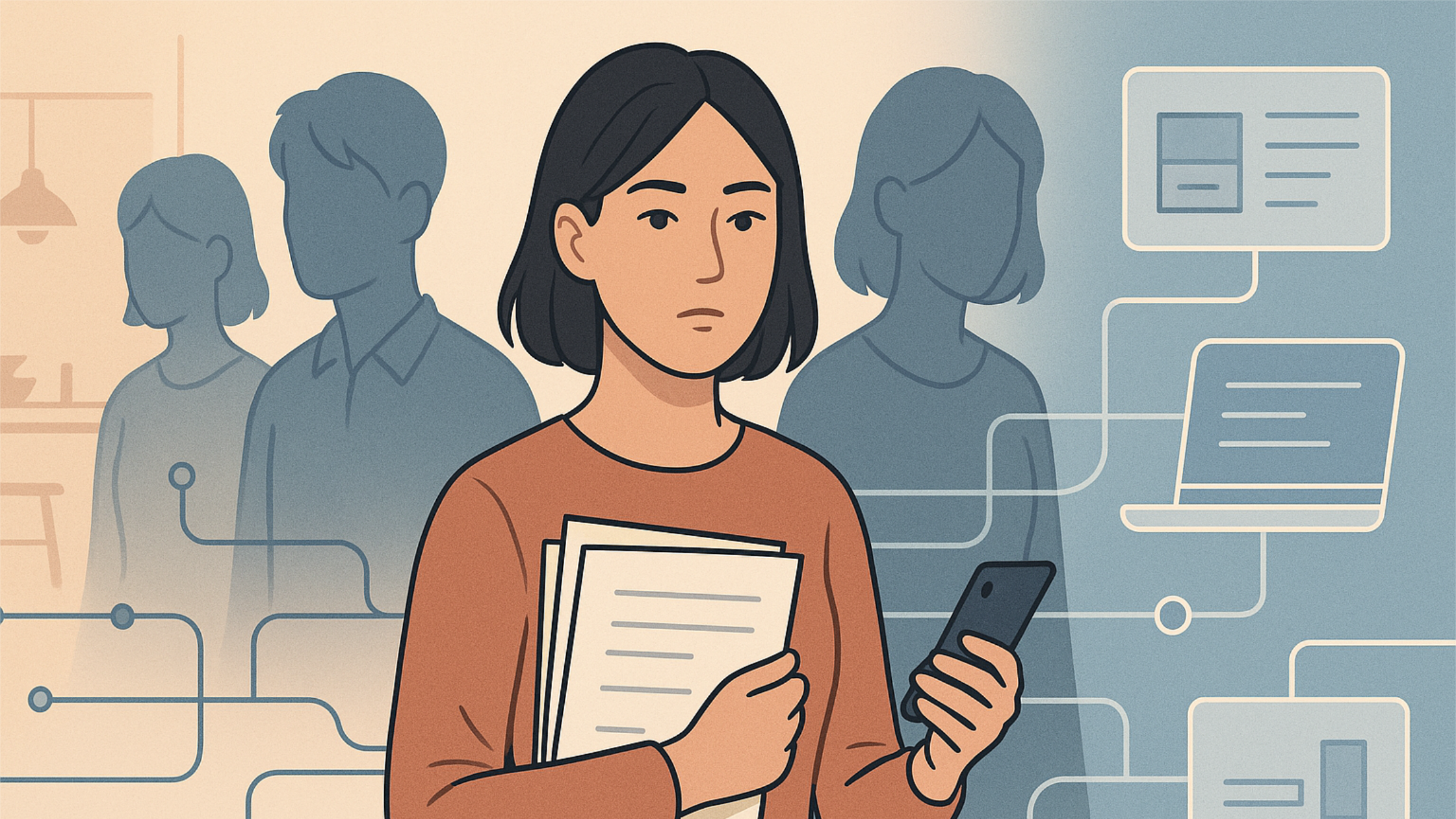
For many people, especially women and eldest daughters, emotional labor isn’t optional — it’s structural.
It comes embedded inside family roles, cultural expectations, and invisible responsibilities that never appear on any to-do list.
This is the gap Emotional Automation tries to solve.
01. Emotional Labor Is the Hidden Operating Cost of a Human Life
Most people think emotional labor means “responding to messages” or “comforting someone.”
But its true cost runs much deeper:
- Task switching between your ambitions and someone else’s urgency
- Holding another person’s emotional world while managing your own
- Being the default problem-solver in a family
- Maintaining relationships at the price of your mental bandwidth
- “Being available” even when your energy is depleted
The cost is invisible — until burnout arrives.
Modern productivity teaches us how to manage our tasks.
But modern life requires us to manage our emotional bandwidth.
This is where Emotional Automation enters.
02. Emotional Automation ≠ Replacing Human Care
It’s not about outsourcing love.
It’s about designing systems that absorb low-stakes emotional load, so your limited energy can be used for:
- High-value relationships
- Deep work
- Long-term projects
- A life aligned with your potential
Think of it as adding a buffer layer between you and the constant stream of emotional micro-requests that interrupt your day.
This buffer can be:
- AI-generated replies
- Automated check-ins
- Categorized emotional alerts
- Delayed responses to maintain natural rhythms
- Systems that “hold the conversation” until you can step in consciously
It’s not avoidance.
It’s architecture.
03. Why Emotional Automation Is Becoming Necessary
Three forces make it inevitable:
1 — Information overload
Your mind is already saturated with notifications, inputs, and decisions.
2 — Emotional expectations are rising
People expect instant replies, emotional availability, and consistent presence — even when they don’t consciously realize it.
3 — Cognitive bandwidth is your real currency
Your most valuable resource is not time.
It’s the clarity required to build the life you want.
Emotional Automation protects that clarity.
04. Emotional Automation Is the Foundation Layer of an AI OS
In the architecture of a personal AI Operating System, Emotional Automation is the entry point — the first layer that stabilizes daily life.
It is the layer that:
- Reduces noise
- Minimizes interruption
- Filters urgency
- Protects attention
- Preserves your highest-value energy
From there, more advanced layers become possible:
- Life-admin automation
- Business automations
- Relationship OS
- Decision frameworks
- Long-term planning systems
This is why Emotional Automation is not a trivial tool —
it is infrastructure.
05. A Real Example: Automating Mother–Daughter Emotional Labor
This concept becomes clear in practice.
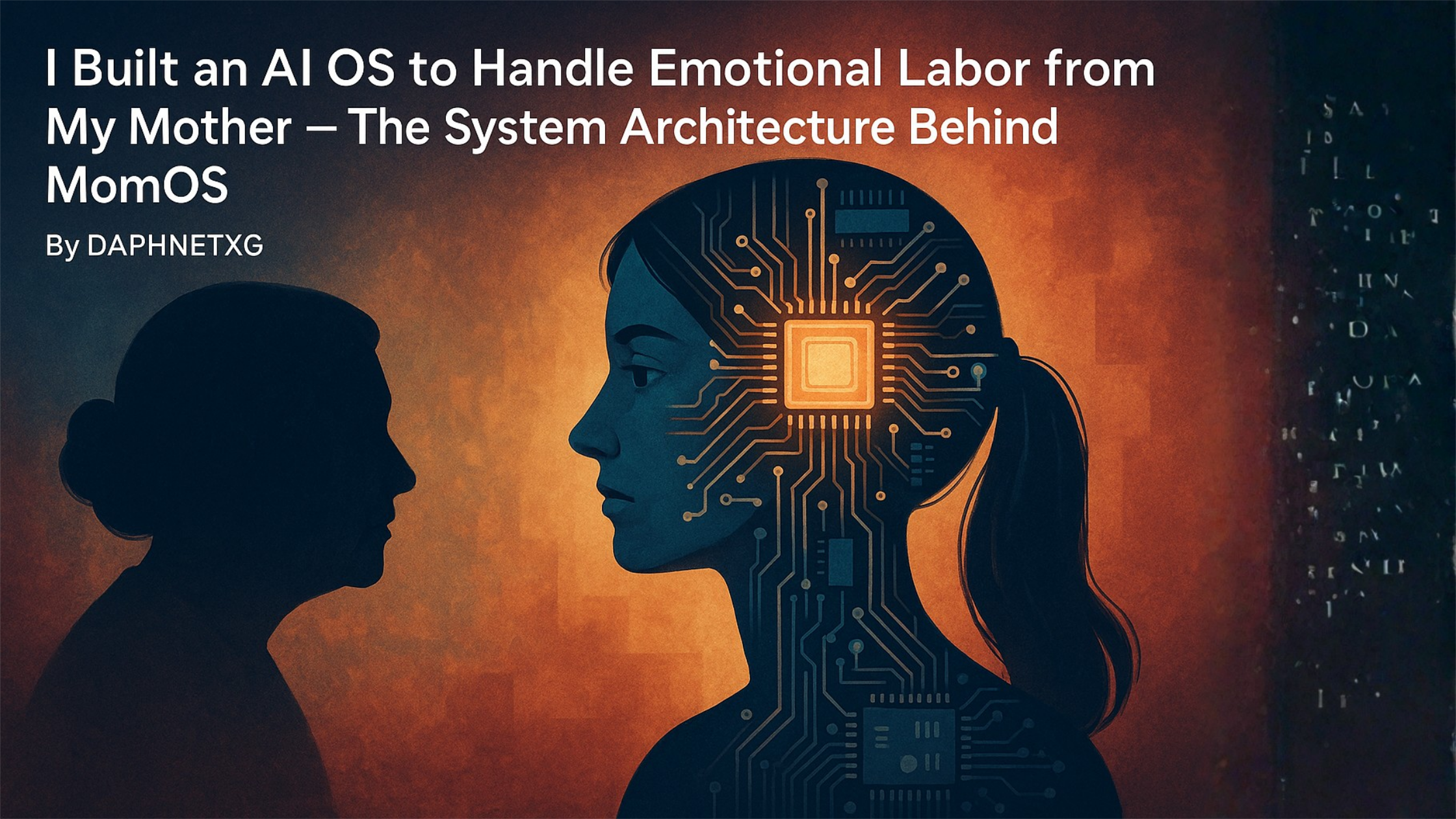
In my deep-dive article on building an AI OS to support my mother’s emotional needs, I show how:
- AI can create gentle, natural, human-sounding replies
- A delay system preserves authenticity
- Categorization filters urgent vs. non-urgent interactions
- The daughter gains mental breathing space
- The mother feels supported instead of ignored
It demonstrates the principle:
Emotional Automation does not weaken relationships —
it protects them from burnout.
Learn more about AI OS I built for handling emotional labor from my mother
Conclusion:Emotional Automation Is Not a Shortcut — It’s a Survival Tool
As cognitive load increases and emotional expectations escalate,
the people who thrive will be the ones who build personal infrastructure around their mental energy.
Emotional Automation is not cold, mechanical, or detached.
It is a way of saying:
“I want to care for the people I love — sustainably.”
This is the future of personal operating systems.
And it is only the beginning.
Written by DAPHNETXG, creator of MomOS — the first AI OS for emotional labor automation.